


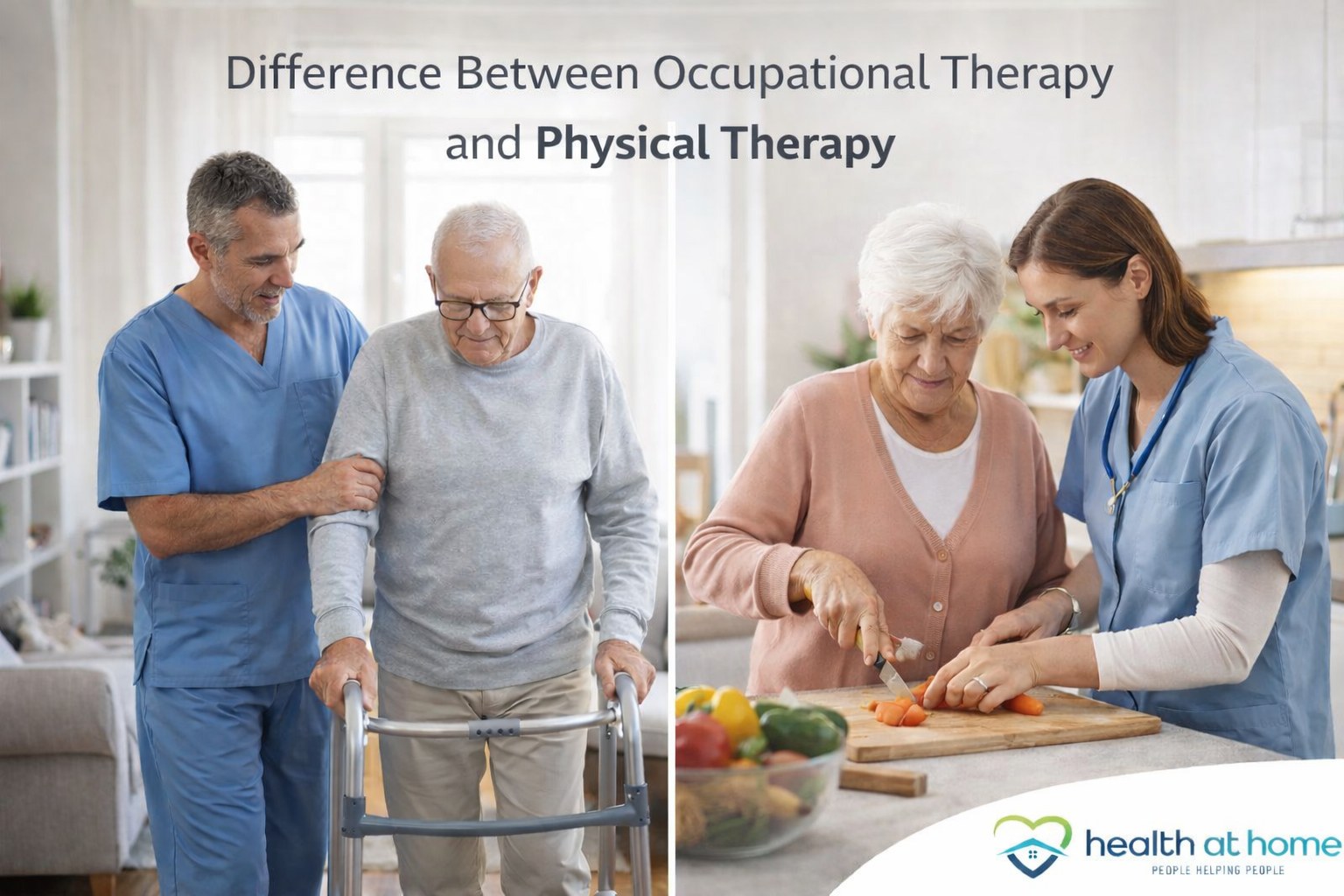
When seniors experience illness, injury, surgery, or age-related decline, therapy plays a vital role in restoring independence and improving quality of life. Families often ask an important question:
What is the difference between occupational therapy and physical therapy?
Although both therapies help seniors function better, they focus on different goals and address different aspects of daily living. Understanding the distinction helps families choose the right care—especially when receiving therapy at home.
What Is Physical Therapy?
Physical Therapy (PT) focuses on improving movement, strength, balance, and mobility. It is commonly recommended after surgery, injury, stroke, or when seniors experience difficulty walking or maintaining balance.
Goals of Physical Therapy
- Restore strength and flexibility
- Improve walking and balance
- Reduce pain and stiffness
- Prevent falls
- Support recovery after surgery or hospitalization
Common Physical Therapy Treatments
- Gait and balance training
- Strength and range-of-motion exercises
- Pain management techniques
- Mobility and transfer training
- Fall-prevention exercises
Physical therapy helps seniors move better and more safely, allowing them to remain active and independent for as long as possible.
What Is Occupational Therapy?
Occupational Therapy (OT) focuses on helping seniors perform daily activities safely and independently. Instead of concentrating only on physical movement, occupational therapy helps individuals adapt to physical, cognitive, or emotional challenges.
Goals of Occupational Therapy
- Improve ability to perform daily tasks
- Promote independence at home
- Support cognitive and memory skills
- Recommend adaptive tools and techniques
- Improve safety in the home environment
Common Occupational Therapy Services
- Assistance with dressing, bathing, and grooming
- Training in meal preparation and household tasks
- Cognitive and memory support
- Fine motor skill development
- Home safety assessments and modifications
Occupational therapy helps seniors live life more comfortably and confidently, even when physical or cognitive limitations are present.
Key Differences Between Occupational Therapy and Physical Therapy
|
Aspect |
Physical Therapy |
Occupational Therapy |
|
Primary Focus |
Movement and mobility |
Daily activities & independence |
|
Goal |
Improve strength, balance, walking |
Improve ability to perform daily tasks |
|
Common Patients |
Post-surgery, fall risk, stroke |
Dementia, arthritis, post-injury |
|
Outcome |
Better physical function |
Better quality of daily life |
Do Seniors Often Need Both Therapies?
Yes. Many seniors benefit most when physical therapy and occupational therapy work together.
For example:
- Physical therapy improves strength and balance
- Occupational therapy helps apply that strength to daily tasks
Together, they create a complete rehabilitation and independence plan—especially when provided in the comfort of home.
Why In-Home Therapy Is Especially Beneficial for Seniors
Receiving therapy at home offers unique advantages:
 Familiar surroundings reduce stressLower risk of falls and infectionsPersonalized, one-on-one attentionTherapy tailored to real-life home situations
In-home therapy is particularly effective for seniors with mobility challenges, dementia, or chronic conditions.
How Health at Home Supports Therapy Needs
At Health at Home, we provide both Occupational Therapy and Physical Therapy as part of our comprehensive home care services.
Our skilled therapists:
- Create personalized therapy plans
- Work closely with caregivers and families
- Focus on safety, comfort, and long-term independence
- Coordinate care with nursing and personal care assistants
Whether a senior needs help walking safely or managing daily routines independently, our therapy services are delivered where they feel most comfortable—at home.
Visit Blog: 𝐇𝐨𝐰 𝐚 𝟐𝟒-𝐇𝐨𝐮𝐫 𝐏𝐞𝐫𝐬𝐨𝐧𝐚𝐥 𝐂𝐚𝐫𝐞 𝐀𝐬𝐬𝐢𝐬𝐭𝐚𝐧𝐭 𝐟𝐨𝐫 𝐒𝐞𝐧𝐢𝐨𝐫𝐬 𝐌𝐚𝐤𝐞𝐬 𝐋𝐢𝐟𝐞 𝐁𝐞𝐭𝐭𝐞𝐫
Conclusion
Understanding the difference between occupational therapy and physical therapy helps families make informed decisions about senior care. While physical therapy focuses on movement and strength, occupational therapy supports independence in daily life.
When combined—and delivered at home—these therapies play a powerful role in helping seniors live safely, comfortably, and with dignity.
If your loved one needs professional therapy support at home, Health at Home is here to help.