


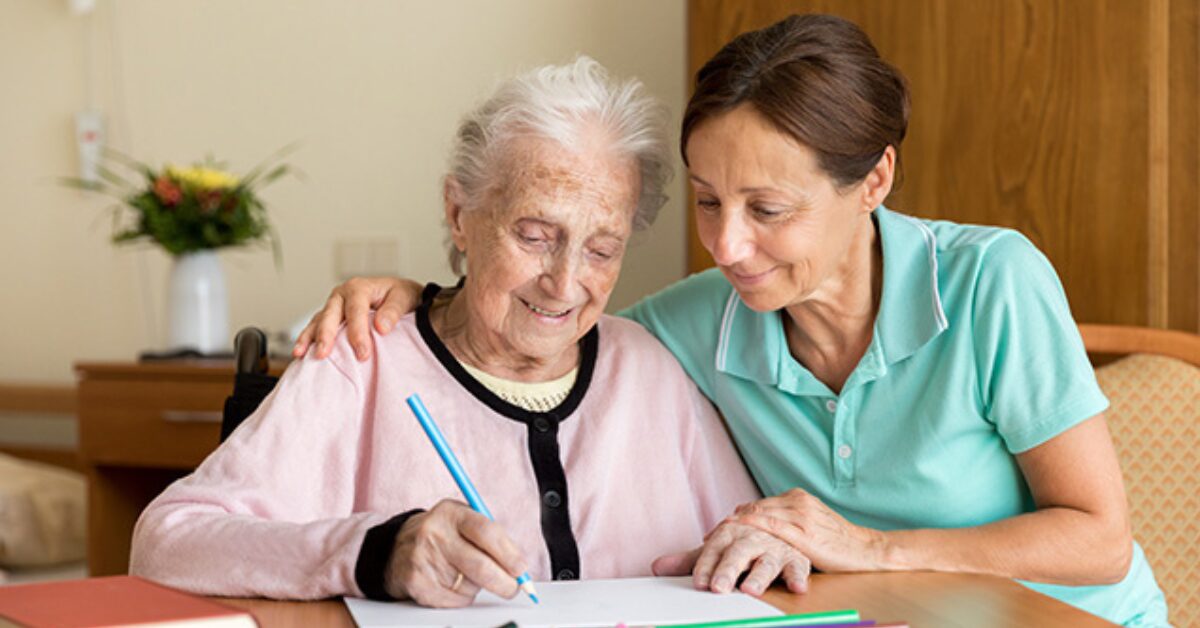
Forgetting where you put your keys is normal. Forgetting what keys are for is not. Forgetting a neighbor’s name is normal. Forgetting that you have neighbors is not. But when you love someone, that line is not always easy to see clearly, and sitting with that uncertainty is one of the hardest things a family faces on the path to dementia care.
When a loved one starts to show signs of cognitive decline, family members find themselves watching more closely than they used to, replaying moments, wondering whether to say something or whether bringing it up will cause more harm than good. They worry about overreacting. They worry about waiting too long. That kind of quiet vigilance is exhausting, and most people carry it without much support.
The line between typical aging and early dementia is something many families struggle to see, and that struggle has a cost. Missed early signs mean missed time: time to plan, time to prepare, and time to make decisions together while your loved one can still be part of them.
You don’t have to keep guessing. Knowing what to look for is one of the most important parts of dementia care, and one of the most practical acts of love you can offer someone you care about.
What Is Dementia?
Dementia is not a single disease. It is an umbrella term for a range of symptoms that affect memory, thinking, and the ability to perform everyday tasks. Several forms of dementia exist, each with its own patterns and progression.
Types of dementia include:
- Alzheimer’s disease: The most common form, accounting for 60 to 80 percent of dementia cases. Alzheimer’s gradually destroys memory and thinking skills and, eventually, the ability to carry out simple tasks.
- Vascular dementia: The second most common type, often occurring after a stroke or series of small strokes. It affects thinking speed, focus, and the ability to organize thoughts.
- Lewy body dementia (LBD): Caused by abnormal protein deposits in the brain, LBD can produce vivid hallucinations, sleep disturbances, and movement changes similar to Parkinson’s disease.
- Frontotemporal dementia: This type primarily affects the frontal and temporal lobes of the brain, leading to significant changes in personality, behavior, and language, often before memory problems appear.
- Mixed dementia: Some individuals, particularly older adults, show the brain changes of more than one type of dementia at the same time, most commonly Alzheimer’s combined with vascular dementia.
- Parkinson’s disease dementia: As Parkinson’s disease progresses, many individuals develop significant memory and thinking problems that qualify as dementia.
What all these forms share: dementia is progressive. But a diagnosis is not a person, and the care that serves someone well today may look very different from the care they need a year from now.
The best dementia care evolves alongside the individual, responding to who they are at every stage rather than simply managing what the condition presents. The earlier families identify a decline and get a diagnosis, the more options they have for building that kind of support thoughtfully, and for making decisions together while their loved one can still be part of them.
13 Early Warning Signs of Dementia to Watch For
These signs do not guarantee a diagnosis. They do mean it’s time to speak with a healthcare provider for proper evaluation. While a diagnosis can feel like your world has been flipped upside down at first, it can also provide clarity and give direction when it comes to thinking about what support might look like.
1. Memory Loss That Disrupts Daily Life
Forgetting recently learned information, asking the same questions repeatedly, or relying heavily on memory aids for things a person once handled independently goes beyond normal forgetfulness. The key difference between a little forgetfulness and a cause for concern is disruption. When memory lapses begin affecting routines and relationships, that pattern deserves attention.
2. Difficulty Planning or Problem-Solving
Struggling to follow a familiar recipe, manage monthly bills, or concentrate on tasks that require sequential steps can signal early cognitive changes. The difficulty is not just that the task feels hard. The process of thinking through the task has become harder in a new way.
3. Confusion With Time or Place
People with early dementia can lose track of dates, seasons, and the passage of time. They may not know where they are or how they got there. Occasionally forgetting the day of the week is normal. Regularly losing track of the year, the season, or familiar surroundings is not.
4. Trouble Understanding Visual Information
For some individuals, early signs of dementia appear in vision and spatial perception. That is difficulty judging distance, trouble reading, or challenges with color contrast. These changes can affect driving, coordination, and navigating familiar spaces. An eye exam can help rule out cataracts or other unrelated vision conditions before going down the route of dementia diagnosis.
5. New Problems With Words in Speaking or Writing
A person with early dementia may stop mid-sentence, struggle to find the right word, or substitute unusual words for familiar ones. They might call a watch a “hand clock” or describe an object rather than name it. Following or joining conversations can become noticeably more difficult.
6. Misplacing Things and Losing the Ability to Retrace Steps
People with dementia may place objects in unusual locations, such as shoes in the refrigerator or glasses in the medicine cabinet, and be unable to retrace their steps to find them. Over time, this pattern can lead to accusations that items have been stolen, which creates distress for everyone involved.
7. Decreased or Poor Judgment
Poor judgment can appear as unusual financial decisions, reduced attention to personal hygiene, or vulnerability to scams. Judgment and decision-making depend on complex cognitive processes, and when those decline, the effects ripple through daily life in ways that are genuinely hard to address.
8. Withdrawal From Work or Social Activities
A person may pull back from hobbies, social events, or projects they once enjoyed. Sometimes the activity has become confusing or frustrating. Sometimes the person senses that something has changed and withdraws to avoid situations that might expose it. Either way, consistent withdrawal from meaningful activities is worth noting.
9. Changes in Mood or Personality
Dementia can produce mood shifts that feel sudden or out of character, such increased anxiety, suspicion, depression, or fearfulness. A person who was once easygoing may become irritable or easily upset, particularly in unfamiliar situations. These changes reflect what is happening in the brain, not who the person is.
10. Challenges Completing Familiar Tasks
Tasks that were once second nature, such as driving to a familiar destination, managing a household routine, or following the rules of a favorite card game, may become difficult or impossible. This is more advanced than slowing down with age. It’s a change in the ability to complete tasks that were previously automatic.
11. Increased Repetition
Repeating the same question within a short period, retelling a story that was just shared, or cycling through the same task multiple times in a row reflects more than a lapse in short-term memory. This type of repetition, distinct from forgetting a name, date, or minor detail, can be one of the earliest and most consistent patterns families observe.
12. Difficulty With Familiar Tasks at Work
While challenges at home are often noticed first, early dementia can also surface in a professional context. A person may struggle to manage projects they have handled for years, forget workplace procedures, or have difficulty keeping up with tasks that were once routine. These changes can appear before problems at home become obvious.
13. Neglect of Personal Hygiene or Self-Care
A decline in grooming, hygiene, or self-care that is new and uncharacteristic can signal cognitive changes. This goes beyond a bad day. When a person who has always maintained their appearance begins consistently skipping basic self-care, it often reflects difficulty initiating or sequencing the steps involved, rather than a lack of motivation.

What to Do If You Recognize Signs of Dementia
Noticing these signs is not a crisis, although it sometimes feels like it. It is information, and information gives you options. If you start noticing some red flags, start taking notes with dates, times, and details of each instance. Having a log of signs and symptoms can paint a picture of what behavior is and isn’t normal for your loved one, giving you greater clarity when it comes time to explore dementia care.
From there, you can:
- Have a candid conversation with your loved one. Everyone’s situation is different, but if you’re in the early stages and don’t yet have a diagnosis, this is a sensitive yet important conversation. It’s important to state your good intentions in bringing this up so you and your loved one can hopefully see eye-to-eye and take the next steps together.
- Schedule an appointment with your loved one’s primary care physician. Share specific observations that are concerning you. Cognitive screening tools are available that can provide a clearer picture.
- Bring someone with you to the appointment if possible. A second set of ears, and someone who can corroborate what you have observed, makes the conversation more productive.
- Begin thinking about the future with intention rather than dread. Early planning, while your loved one can still participate in decisions, gives everyone more agency.
- Explore in-home caregiver support. Dementia home care does not mean giving up independence. The right support at the right time allows your loved one to remain safely at home, doing the things that matter most to them.
Understanding Your Options for Dementia Care in Florida
At Health at Home, we have spent decades working with families navigating exactly what you are navigating right now. We know there is no script for this, and that it can feel like you are making it up as you go. What families often need most is not just practical help. They need someone who understands what this actually looks like day to day.
Part of that understanding means knowing what care options exist, and how to think about them as needs change over time. Families exploring dementia care in Florida generally encounter a few different models.
Memory care facilities offer structured, supervised environments for individuals who need around-the-clock support. Adult day programs provide daytime engagement and supervision while a primary caregiver works or rests. Residential assisted living communities can bridge the gap for those who need more support than home allows but are not yet in need of full nursing care.
For many families, though, in-home dementia care is the right place to start. And for some, it remains the right place throughout the journey.
Staying at home preserves familiarity, routine, and independence in ways that matter deeply to people with dementia. It keeps them close to the people and spaces they know. And with the right in-home caregiver support, it is more than possible to provide genuinely high-quality, responsive care without uprooting the life your loved one has built.
What Our Dementia & Alzheimer’s Care Services Include
Our non-medical home care services are designed to grow with your loved one’s needs, adapting as the condition evolves so that the care always fits the person, not just the diagnosis. This level of care includes but isn’t limited to:
Memory Care Support: Our caregivers provide tailored activities and strategies to engage cognitive function, from memory games to meaningful daily routines. This is paired with the emotional support your loved one needs to feel safe and seen.
Personal Care Assistance: We assist with bathing, dressing, grooming, and other aspects of daily living with the sensitivity and dignity your loved one deserves.
Companionship and Social Connection: Our caregivers provide genuine companionship and social engagement that reduces isolation and improves quality of life for both individuals with dementia and their families.
Medication Management: We help manage medication schedules and ensure medications are taken as prescribed, giving families one less thing to worry about.
Every care plan we build centers on the individual. Our caregivers bring training in dementia care techniques alongside patience, empathy, and the kind of steady presence that makes a real difference.
Is It Time to Explore In-Home Dementia Care in Florida? Get a Free Assessment
The right time to explore dementia care is before you feel like you have no other choice. Early conversations give families more options, more time, and more peace of mind than waiting until a crisis forces the decision.
Health at Home offers a free in-home assessment for families across Broward County, Indian River County, Martin County, Palm Beach County, and St. Lucie County. We will come to you, get to know your loved one, and work with your family to understand what level of support makes sense right now and how that might evolve. From there, we build a personalized care plan.
Reach out today to schedule your free assessment. The conversation costs nothing, and it could change everything about how the road ahead looks for your family.