

When it comes to surgery, we tend to start planning life around that specific date, met with an onslaught of jobs to be done in preparation.
There are pre-op appointments, instructions from the surgeon, medications to review, transportation to arrange, and usually a long list of things you can and can’t do before the procedure. With so much attention understandably focused on surgery day, it’s easy to leave one important question until later: What will life actually look like when you or your loved one gets home?
Going home is an important milestone, but discharge doesn’t mean you’re fully recovered. Depending on the procedure, you or your loved one may be dealing with pain, fatigue, limited mobility, new medications, an incision that needs attention, or restrictions on lifting, driving, bathing, stairs, and other everyday activities.
Pair that with the general limitations of healthy aging, and you’ll want to do everything you can to make post-op recovery as seamless as possible. That’s why arranging in-home care before surgery can make such a difference.
At Health at Home, we help seniors and families think through that transition before they’re standing at the hospital doors with discharge paperwork in hand. Planning ahead gives us time to work through outstanding questions with you and help put the right support in place for the return home.
Why Arrange In-Home Care Before Surgery?
Recovery can look very different on paper than it feels in real life, especially for seniors.
You may know you’ll have a lifting restriction, for example, but not realize how many ordinary tasks involve lifting, reaching, bending, or carrying until you’re back in your own kitchen or bathroom. You may expect to be walking after surgery but still need someone nearby the first few times you shower or navigate the house.
Even everyday responsibilities can feel different when you’re tired, uncomfortable, or taking medications that affect how you feel. Planning ahead allows you to look at those realities before surgery rather than solving each problem as it comes up afterward.
This includes everything from making frequently used items accessible to addressing fall hazards. Discharge planning should also identify whether you’ll need help with personal care, household tasks, medications, medical equipment, or other health needs when you return home.
With a plan already in place, the first days home can stay focused on resting and recovering.
1. Start by Asking What Your Recovery Will Require
Before arranging post-surgical care, talk with your surgeon or medical team about what they expect your recovery to involve. Every procedure is different. So is every patient.
Ask how mobile you’re likely to be when you return home, whether you’ll have restrictions on stairs or lifting, how you’ll manage your incision, what equipment you might need, whether you’ll be able to shower independently, and when you’ll be able to drive again.
It’s also important to understand whether your physician expects you to need skilled services after discharge.
Medicare-covered home health care can include medically necessary, intermittent skilled nursing for needs such as:
- Surgical wound care
- Patient and caregiver education
- Injections
- Monitoring vitals
- Physical therapy
- Occupational therapy
- Speech therapy
- And other covered home health services
Knowing what’s expected medically gives you a starting point. From there, you can consider the everyday support that may be just as important once you’re actually home.
2. Understand the Difference Between Home Health Care and In-Home Care
This distinction is particularly important when you’re planning for surgery.
Home health care addresses skilled clinical needs.
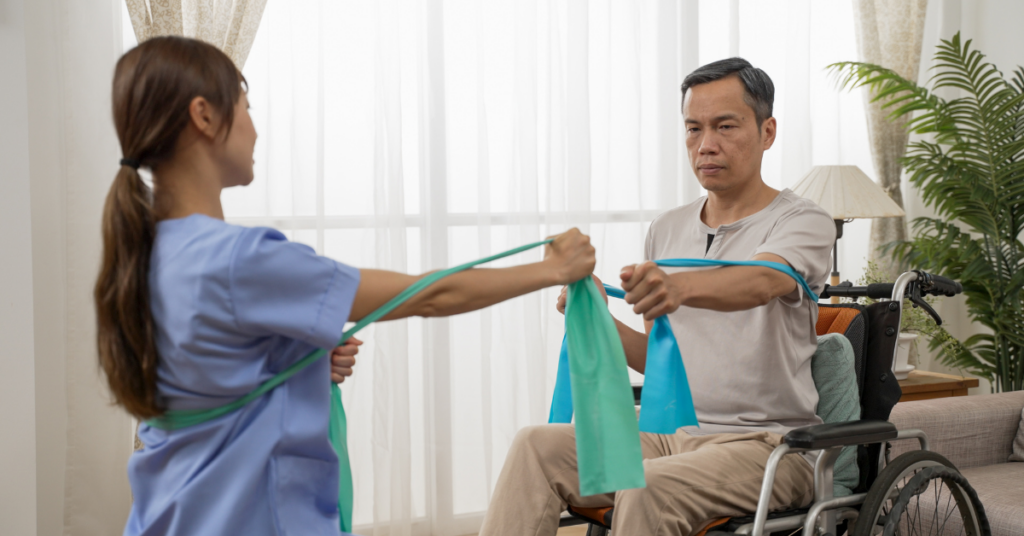
Depending on your physician’s orders, eligibility, and care plan, that may include skilled nursing for wound care or health monitoring, physical therapy to improve mobility, or occupational therapy to help you safely perform daily activities again.
Private duty home care supports everyday life during recovery.
A caregiver might help with bathing and dressing, preparing meals, light household tasks, mobility, transportation, errands, or simply being there while you’re regaining strength and confidence.
You may need one or the other. You may also need both.
For example, a nurse might visit to assess your condition and provide ordered wound care, while a private duty caregiver provides more consistent support with meals, personal care, mobility, and daily routines between skilled visits.
In Florida, licensed home health agencies may provide skilled services from nurses and therapists and/or unskilled services from home health aides, certified nursing assistants, homemakers, and companions.
This is one of the advantages of arranging post-surgical care through Health at Home. Because we provide both private duty home care and Medicare-certified home health care, we can look at your recovery more holistically instead of treating your clinical and everyday needs as completely separate experiences. Integrated in-home care can equate to quicker, safer recovery, minimizing risk of hospital readmittance.
3. Think Beyond the First Day Home
It’s natural to focus on getting through the first 24 hours after discharge. But your care needs may look different on day three, at the end of the first week, and several weeks into recovery.
You may initially need significant help getting dressed, showering, preparing meals, and moving safely around the house. As your strength returns, some of that support may no longer be necessary. At the same time, therapy, follow-up appointments, or other parts of your recovery may continue.
That’s why we don’t look at post-surgical in-home care as a static schedule. The level of support should reflect what you need at each stage of recovery. Our team assesses progress and maintains open dialogue about care needs to maximize safety and comfort.
4. Know Who Is Handling What
Post-surgical recovery can involve more people than you might expect. There may be a surgeon, primary care physician, nurse, physical or occupational therapist, professional caregiver, family member, and other specialists involved at different points.
Before surgery, it helps to clarify who is responsible for what.
Who will provide transportation home? Who will pick up prescriptions? Who should be called with a question about the incision? Who will help with meals or personal care? When will therapy begin if it’s ordered? Who will get you to your follow-up appointment if you can’t drive?
Your hospital’s discharge team will help develop a discharge plan, which can include setting up in-home care.
At Health at Home, communication is an important part of the experience too. When multiple services are involved, having a team that understands both the clinical care plan and what daily life looks like at home can help create a smoother transition.
5. Don’t Assume Family Has to Cover Every Gap
A spouse, adult child, or friend may absolutely want to help after surgery. That doesn’t necessarily mean they should be responsible for every part of your recovery. Think realistically about what the person helping you can safely and consistently do.
Helping prepare dinner is different from assisting someone into a shower. Driving you to a follow-up appointment is different from being available every morning and evening. And a family member who’s comfortable helping around the house may not be comfortable with personal care or a clinical need.
Professional in-home care can fill those gaps without replacing the people who care about you.
Instead of your spouse or adult child spending every visit managing meals, laundry, bathing, mobility, and the next item on the recovery checklist, a caregiver can take on appropriate day-to-day support.
That gives family more room to be family while you recover.
6. Schedule an In-Home Care Assessment Before Your Procedure
If your surgery is scheduled in advance, you don’t have to wait until discharge to begin planning care. Health at Home offers a free in-home assessment that gives us an opportunity to understand what recovery will actually look like in your environment.
During the assessment, we’ll talk through your:
- Upcoming procedure
- Anticipated restrictions
- Health history
- Medications
- Mobility & the layout of your home
- Who else will be available to hel
- Daily activities that may be difficult during recovery
Walking through the home can also reveal practical considerations that are easy to miss when you’re thinking about surgery in the abstract.
Is the bedroom upstairs? How far is the bathroom? Is there a safe way to get in and out of the shower? Will you need a walker or another mobility device? Are there loose rugs or narrow pathways? Will you be able to prepare food without bending or reaching?
Our goal is to help make your normal environment work for you while your body heals.
What If You’re Already in the Hospital?
Planning before surgery is ideal, but sometimes surgery isn’t planned. You still have options.
Hospital discharge planners, nurses, physicians, and other members of the care team can help determine what you’ll need when you leave.
Health at Home regularly works with individuals and families navigating these transitions. When possible, our team can coordinate with the appropriate members of your medical and discharge team, assess what you’ll need at home, and help prepare for the transition. With us, you can have in-home care in place within 24 hours of reaching out.
You may not have had the opportunity to plan ahead. That doesn’t mean you have to figure out the next step alone.
Plan for a Safer Recovery with In-Home Care in Florida
The most ideal time to think about post-surgical care is before you need it. Health at Home has spent more than 25 years helping individuals and families throughout Southeast Florida recover safely at home after procedures including joint replacements, orthopedic and spine surgeries, cardiac procedures, abdominal surgeries, cancer-related surgeries, neurological procedures, and outpatient procedures.
Because we handle both private duty home care and Medicare-certified home health care, support can be tailored to what your recovery actually requires without the hassle of dealing with multiple providers.
If you or an aging loved one has surgery coming up, reach out to schedule a free in-home assessment. We’re here to answer your questions and put a personalized care plan in place so you’re not left figuring it out after discharge.