
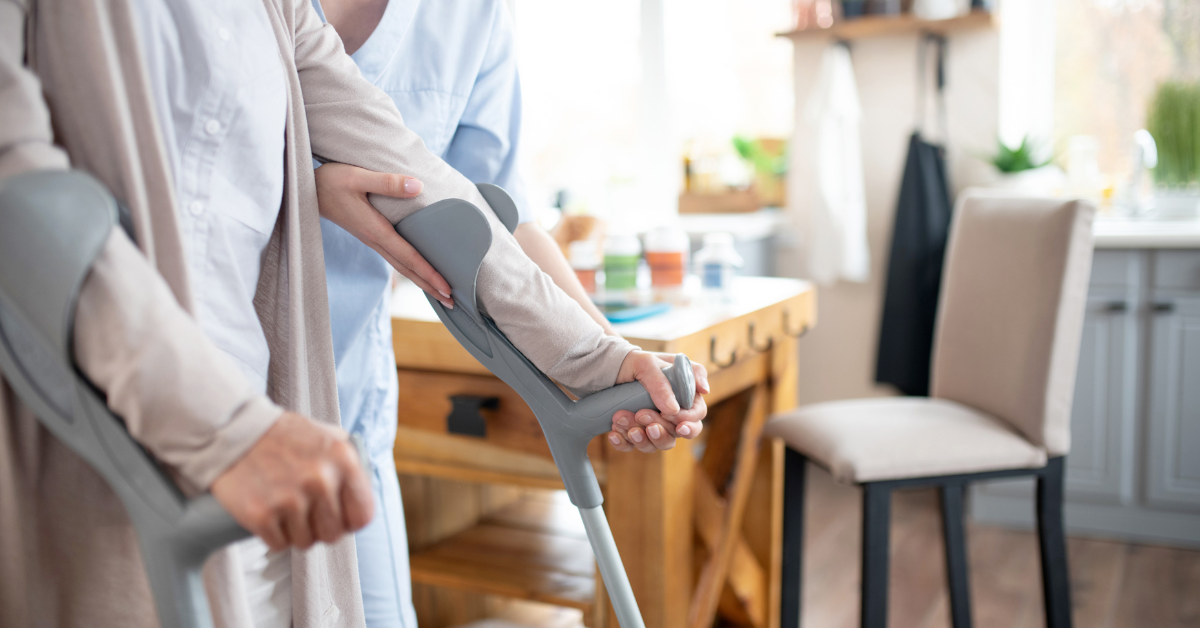
Home care after surgery can make recovery at home safer, smoother, and more manageable for everyone involved.
When someone you love has surgery, most of the attention naturally goes toward the procedure itself. You’re thinking about the surgeon, the hospital, the risks, the outcome, and the relief of getting through it. But once discharge papers are signed, a new set of questions comes up.
Who’s helping them get to the bathroom safely?
Are they taking medications correctly?
Is the incision healing the way it should?
Can they shower alone?
Are they eating enough?
What does proper healing and recovery look like?
Patients, families and physicians often arrange home care after:
- Joint replacement surgery
- Hip fracture repair
- Heart surgery
- Spine surgery
- Abdominal surgery
- Cancer surgery
- Vascular procedures
The days and weeks after surgery matter nearly as much as the procedure itself. What happens at home can affect healing, comfort, safety, and whether someone ends up back in the hospital.
That’s where post-surgery home care in Florida can help. With the right support in place, your loved one can return home with more structure, more supervision, and a care plan that supports their recovery instead of leaving the family to figure everything out alone.
What does Home Care After Surgery Include?
There are two main types of support families often need after discharge: home health care after surgery and private duty home care. They sound similar, but they serve different purposes. Understanding the difference can help you arrange the right kind of post operative care at home.
Many families assume that home health care means someone stays with their loved one throughout the day. In reality, skilled home health visits are intermittent.
A nurse or therapist visits based on the physician’s plan of care to provide clinical services such as wound care, therapy, medication education, or other skilled treatments. If someone also needs help getting dressed, preparing meals, using the bathroom safely, or simply having someone there throughout the day, private duty home care fills that gap.
One of the biggest challenges after surgery isn’t simply finding help. It’s making sure everyone involved is working together. Nurses, therapists, caregivers, physicians, discharge planners, and family members all play different roles in the recovery process. When communication breaks down, recovery can become more complicated.
That’s why coordinated care matters. When everyone stays informed and works toward the same goals, transitions home are smoother, concerns are identified sooner, and families can feel more confident throughout the recovery process.
At Health at Home, we offer both Medicare-certified home health and private duty home care. When appropriate, these services can work together as one coordinated plan, helping ensure everyone involved is communicating, working toward the same goals, and supporting your loved one’s recovery.
Home Health Care After Surgery
Home health care is skilled, clinical care provided in the home by licensed professionals. After surgery, this may include visits from a registered nurse, physical therapist, occupational therapist, speech therapist, or other qualified clinician.
This type of care is usually ordered by a physician and provided on a scheduled basis. Depending on the patient’s needs and insurance eligibility, home health care may be covered by Medicare, Medicaid, or private insurance.
Home health care after surgery may include:
- Wound care and incision monitoring
- Medication teaching and management
- Vital sign monitoring
- Pain and symptom assessment
- Physical therapy to rebuild strength and mobility
- Occupational therapy to improve safety with daily activities
- Speech therapy when communication or swallowing are affected
- Education for the patient and family
- Communication with physicians when concerns arise
This level of care is especially helpful when your loved one has a wound, mobility limitations, new medications, a higher risk of complications, or a physician-directed recovery plan that requires advanced clinical oversight.
Private Duty Home Care After Surgery
Private duty home care, sometimes called non-medical or unskilled home care, supports the day-to-day side of recovery. This type of care doesn’t require a physician’s order and can often begin quickly after a consultation and assessment.
Private duty caregivers do not replace skilled nurses or therapists. Instead, they help with the daily routines that become harder after surgery.
Post surgery in home care may include:
- Help with bathing, dressing, grooming, and toileting
- Assistance getting in and out of bed or a chair
- Mobility support and fall prevention
- Meal preparation and hydration reminders
- Light housekeeping and laundry
- Medication reminders
- Transportation to follow-up appointments
- Grocery shopping and errands
- Companionship and supervision
- Help maintaining a safe, comfortable recovery environment
For many families, this is the support that makes home after hospital feel possible. Your loved one may not need a nurse in the home all day, but they may need steady help getting through the day safely.
At Health at Home, many families benefit from both skilled home health services and private duty home care. Because both services are available through one coordinated team, communication is simpler, care is more connected, and everyone involved can stay focused on helping your loved one recover safely at home.

The Benefits of Home Care After Surgery
Surgery can temporarily change almost everything about a person’s normal routine. Even someone who was independent before surgery may come home weaker, slower, more tired, or less confident.
While that’s normal, it still needs to be taken seriously and requires diligence to identify and act on concerning patterns. After surgery, common challenges can include:
- Increased fall risk
- Difficulty bathing or dressing
- Trouble preparing meals
- Medication confusion
- Pain that limits movement
- Fatigue or weakness
- Difficulty following discharge instructions
- Wound care concerns
- Missed follow-up appointments
- Caregiver stress within the family
Families often underestimate how much help will be needed until their loved one is already home. You may expect recovery to feel simple because the hospital said they were ready for discharge. In reality, “medically ready to leave the hospital” does not always mean “fully able to manage safely at home.”
In-home care in Florida gives your loved one practical support during a vulnerable time. It also gives you peace of mind that someone is paying attention to the details.
A Safer Transition Home
The first few days after discharge can be difficult. A caregiver can help reduce fall risks, support safe movement, and assist with personal care while your loved one regains strength.
Better Consistency with Recovery Routines
Surgery often comes with instructions for medications, movement, meals, hydration, wound care, appointments, and activity restrictions. Home care helps keep those routines more organized.
Less Pressure on Family Caregivers
You may want to do everything for your loved one, but caregiving after surgery can be physically and emotionally demanding. Having professional support allows you to be present without carrying every responsibility alone.
Support that can Adjust as Needs Change
Some people need short-term help for a few days or weeks. Others need ongoing support as they recover from a major surgery, illness, or hospitalization. A strong care plan should be flexible enough to change as your loved one improves.
More Eyes on Recovery
A trained caregiver or clinician may notice changes that family members miss, such as increased weakness, confusion, poor appetite, unsafe movement, or a change in the home environment. Early attention can make a meaningful difference, as in lowering the likeliness of readmittance to hospital.
How to Arrange Home Care After Surgery
Whether the surgery is planned or happens unexpectedly, it’s still important to begin arranging care as early as possible, even if that means starting the process quickly after discharge. The situation may feel rushed or overwhelming, but the process should still feel clear, organized, and guided.
At Health at Home, we help families throughout Palm Beach County, Broward County, Martin County, St. Lucie County, and Indian River County arrange post-op home care with a simple but thoughtful process. Our goal is to get you quality in-home care placed as quickly as possible.
1. Start with a free consultation
The first step is a conversation. Whether you’ve been referred by a physician or found us on your own accord, you’ll share what happened, what surgery your loved one had or is preparing for, where they’re recovering, and what concerns you have about home.
This is also where we help you understand which type of care may be appropriate. Some families need private duty home care. Others need Medicare-certified skilled home health care. Many benefit from both.
2. In-Home Assessment
During the assessment, our Registered Nurse will evaluate mobility, fall risks, the home environment, available family support, physician recommendations, and any clinical or personal care needs. This allows us to recommend the right level of care and begin planning for a safe recovery.
3. Build a personalized care plan
Once needs are clear, the care plan can be built around the person, the surgery, the physician’s instructions, and the family’s concerns. A care plan may include help with morning routines, showering, meals, mobility, medication reminders, overnight support, transportation, or coordination with skilled services.
4. Match the right caregiver or clinical team
Care is personal. The right caregiver match can make a big difference in how comfortable your loved one feels accepting help.
At Health at Home, our caregivers are W-2 employees who are background-checked, fingerprinted, trained, uniformed, and supported by our care leadership team. Just as important, families aren’t left wondering how things are going. We believe in clear, ongoing communication so you stay informed, questions get answered, and everyone involved in your loved one’s care remains connected.
5. Adjust care as recovery changes
Recovery is not always a straight line. Your loved one may need more help at first and less help later. Or, they may have new needs after a follow-up appointment. A good post surgery home care plan should be able to adjust as strength, safety, and independence change.
Need Help Bringing a Loved One Home After Surgery?
Coming home from the hospital is an important step, but it’s also the point where many families realize they need more support than they expected.
Health at Home helps families arrange care after surgery with practical guidance, clinical insight, and sincere empathy for how stressful this transition can feel. Whether your loved one needs help with post-operative routines, skilled home health care after surgery, or day-to-day support while they regain strength, our team can help you understand your options and make informed decisions.
Because we work with families, physicians, surgeons, hospitals, and senior living communities across South Florida, we understand how important continuity of care is after surgery. You deserve a team that can help connect the dots, communicate clearly, and support your loved one at home with professionalism and compassion.
If your loved one is preparing for surgery or getting ready to leave the hospital, contact Health at Home to schedule a free consultation.