
24-HOUR HOME CARE · IN-HOME · SOUTHEAST FLORIDA
In-Home Care for Stroke Survivors
- Medicare Certified
- ACHC Accredited
- 25+ Years Serving Florida
Clinically reviewed by Carissa Grone, BSN, RN · Last reviewed November 6, 2026
Stroke Recovery Care, in Home.
Life after a stroke can look very different from one person to the next. Some survivors return home with relatively minor limitations, while others face challenges with mobility, communication, memory, or everyday activities they once managed independently.
Even seemingly simple tasks, like getting dressed, preparing a meal, or moving safely around the house, may require additional time, patience, and support.
For families, the transition home can bring a mix of relief, hope, and uncertainty. At Health at Home, we help stroke survivors and their families navigate recovery with compassionate, personalized in-home care that supports both immediate needs and long-term quality of life.
For more than 25 years, we’ve served families throughout Palm Beach County, Broward County, Martin County, Indian River County, and St. Lucie County with private duty home care, skilled nursing, and rehabilitative therapies designed to help individuals recover and live as independently as possible.
The Benefits of In-Home Care for Stroke Survivors
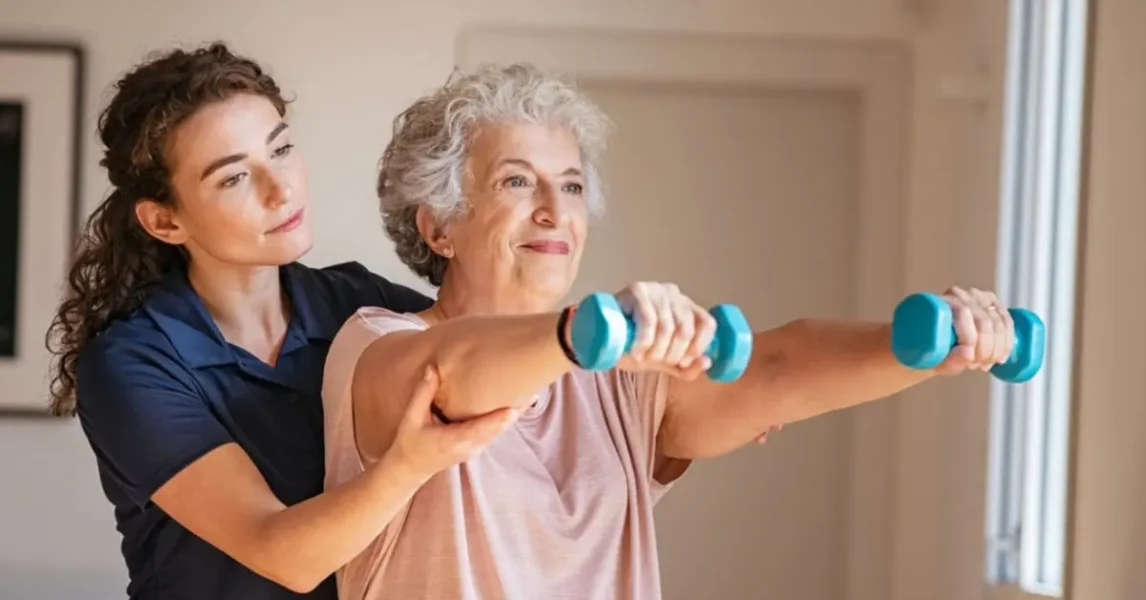
Returning home after a stroke can be an important milestone in recovery. Familiar surroundings offer comfort, while everyday activities provide opportunities to practice skills, rebuild confidence, and regain independence at a pace that reflects each person’s abilities.
According to the American Stroke Association, stroke recovery can continue for months or even years, with rehabilitation focused on restoring function, improving independence, and helping survivors return to meaningful daily activities.
With the right support in place, in-home care for stroke survivors can help:
- Promote independence through assistance with everyday activities and personal care
- Support mobility and reduce fall risks within the home
- Reinforce rehabilitation goals through safe, everyday routines
- Provide access to skilled nursing and physical, occupational, and speech therapy when appropriate
- Encourage social connection, emotional well-being, and confidence during recovery
- Ease caregiving responsibilities while keeping family members involved and informed
How Health at Home Supports Stroke Recovery
Stroke recovery involves much more than regaining physical strength. Depending on the areas of the brain affected, survivors may experience changes in balance, coordination, speech, memory, swallowing, or emotional well-being. These challenges can affect nearly every aspect of daily life, often requiring a combination of practical assistance and clinical support.
Some individuals need temporary help as they regain strength following hospitalization. Others benefit from ongoing care that accommodates lasting changes in mobility or independence.
Health at Home brings private duty home care and Medicare-certified home health services together under one organization, making it easier for families to coordinate everyday assistance with specialized healthcare services when needed.
-
Personal Care
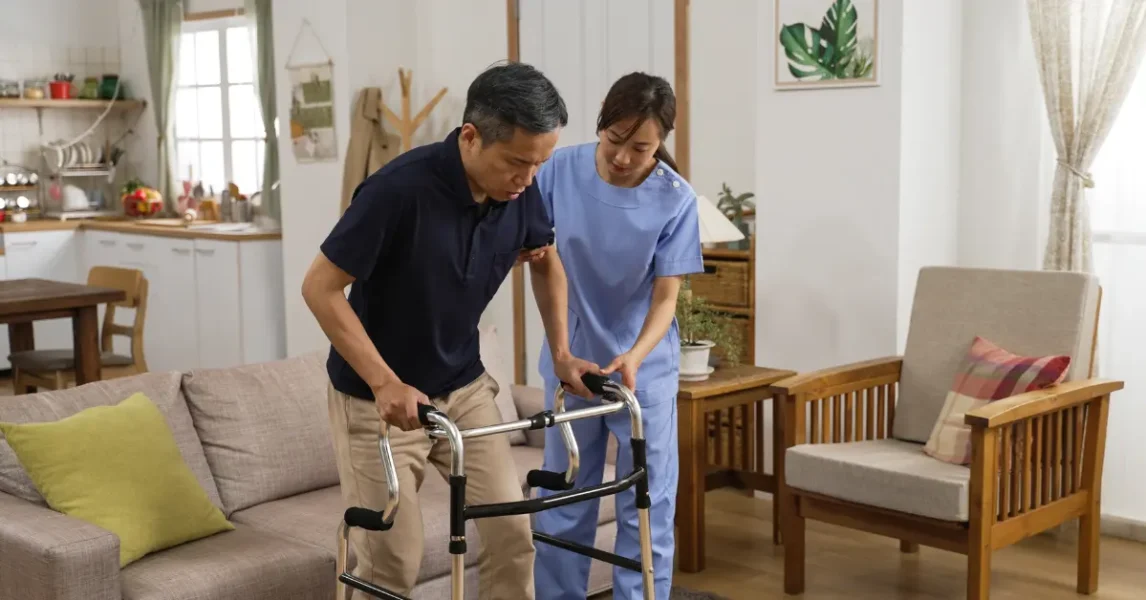
Limited mobility, weakness, and coordination difficulties can make personal routines challenging after a stroke. Our caregivers provide respectful assistance with bathing, dressing, grooming, toileting, transfers, and mobility while encouraging independence whenever it’s safe and appropriate.
-
Companion Care
Stroke recovery can be emotionally demanding, particularly when physical or communication challenges limit social interaction. Our caregivers offer conversation, companionship, encouragement, and meaningful activities that help survivors stay engaged and connected to everyday life.
-
Household Duties
A comfortable, organized home can make daily life easier during recovery. We assist with meal preparation, light housekeeping, laundry, grocery shopping, and other household responsibilities so stroke survivors can focus on their health and rehabilitation.
-
24-Hour Home Care
Some stroke survivors require ongoing assistance due to significant mobility limitations, safety concerns, or complex daily care needs. We offer flexible scheduling, from part-time support to 24-hour home care, based on each individual’s circumstances.
-
Skilled Nursing
Our skilled nursing team provides medical support for qualifying individuals recovering from a stroke, including health monitoring, medication management, patient and family education, and physician-coordinated care. Services are tailored to individual medical needs and the prescribed plan of care.
-
Physical, Occupational, and Speech Therapy
Rehabilitation is often an essential part of rebuilding independence after a stroke. When clinically appropriate, our home health team provides physical therapy to support mobility and balance, occupational therapy to improve daily living skills, and speech therapy to address communication and swallowing difficulties.
“Health at Home has given my family real peace of mind by providing my father with amazing caregivers. RN Nicole tends to my father with expert skills, kindness and compassion. Jill is a fantastic physical therapist who is helping my dad maintain his strength through personalized PT sessions. We can’t thank you enough!”
Suzanne Bohan
Supporting the Whole Family Through Stroke Recovery
When someone you love experiences a stroke, life can change for the entire family.
You may suddenly find yourself coordinating medical appointments, learning how to assist with mobility, managing new household responsibilities, or helping your loved one adjust to abilities that have changed. And while the immediate focus is often on physical recovery, the emotional impact can be just as significant.
It’s also important to remember that progress isn’t always linear. Some days may bring encouraging improvements, while others require more patience and assistance. Having professional support at home can help make those transitions easier to manage.
At Health at Home, we recognize that many stroke survivors want to maintain as much control over their lives as possible, and families want to provide support in ways that are safe, practical, and sustainable. Our caregivers and clinical professionals work alongside both, helping individuals participate in everyday life while giving loved ones greater confidence in the care being provided.
Why Families Choose Health at Home
Every stroke survivor brings a different set of abilities, challenges, and recovery goals home from the hospital. Effective care begins with understanding those individual circumstances and creating a plan that provides appropriate assistance while making room for progress.
With more than 25 years of experience serving South Florida families, Health at Home combines the personal attention of a dedicated caregiver with the clinical resources of an established, Medicare-certified home health agency.
Families trust Health at Home because we offer:
- Personalized care plans based on each stroke survivor’s abilities, needs, and recovery goals
- Trained, background-checked caregivers supported by agency resources
- Private duty home care and skilled home health services under one organization
- Flexible scheduling, including part-time assistance and 24-hour home care
- Consistent communication, family involvement, and guidance throughout the care process
Stroke Recovery FAQs
How much recovery can we expect after a stroke?
Most measurable gains happen in the first three to six months, though improvement continues past that with consistent therapy. How much depends on the stroke’s size and location.
What is within your control is not losing time. A gap between hospital discharge and therapy starting at home is a gap in the best recovery window there is, and it is the most common avoidable loss in stroke care.
What therapy will my loved one need?
Usually a combination: physical therapy for mobility and balance, occupational therapy for dressing, bathing and daily tasks, and speech therapy for language or swallowing.
Many stroke patients need all three. Because all three come from one agency here, the therapists work from one coordinated plan and the caregiver supporting the exercises between visits is working from the same one.
Is swallowing a problem after stroke?
Frequently, and it is the risk families most often miss. Roughly 47 percent of stroke patients experience difficulty swallowing.
It raises the risk of aspiration pneumonia, which is a leading cause of post-stroke readmission. A speech therapist evaluates swallowing at an actual meal in the home and trains the caregiver on textures and positioning for every meal after that.
How do we prevent a second stroke?
Medication adherence, blood pressure control, and the diet and activity the physician prescribed. None of it is complicated.
The failure point is almost always consistency at home over months, after the urgency of the first stroke has faded. That is what daily support is for, and it is the least dramatic and most valuable thing a caregiver does.
What is aphasia and will it improve?
Aphasia is the loss of language ability while intelligence stays intact, which is why it is so frustrating for the person living with it. Stroke is its leading cause, and about one third of stroke survivors have it.
It commonly improves with speech therapy, substantially in some cases. Families also learn communication techniques that reduce the isolation while recovery is underway, which matters because being talked around is its own injury.
Does Medicare cover stroke rehabilitation at home?
Yes, when a physician orders it and the patient meets the homebound criteria, which most stroke patients do initially. Medicare covers nursing and all three therapies with no copayment or deductible.
The personal care hours alongside it are private pay. Long-term care insurance often reimburses that portion, and we supply the documentation the policy requires.
How long will we need help at home?
It varies more than in almost any other condition. Mild strokes may need a few weeks of support, while significant strokes often need ongoing help with daily tasks indefinitely.
The plan is reassessed by an RN as function returns, and hours come down as the survivor takes tasks back. Care plans are adjusted, not fixed at signing, which matters when recovery is this unpredictable.
Schedule a Free In-Home Care Assessment
Coming home after a stroke is an important step forward, and having the right support can make that transition more comfortable for everyone involved. Whether your loved one is preparing for hospital discharge, actively participating in rehabilitation, or adjusting to long-term changes, our team can help you understand the care options available.
Contact Health at Home today to schedule a free in-home assessment. We’ll take the time to understand your loved one’s needs, answer your questions, and recommend a personalized care plan that supports safety, independence, and quality of life at home.