

Every home tells a story. Some tell the story of decades spent raising a family. Others reflect the routines that have brought comfort, independence, and familiarity over the years.
When health begins to change, those familiar surroundings become part of the conversation.
The layout of the home. The stairs that feel steeper. The daughter coordinating care from another state. These details rarely appear on a medical chart, yet they often determine what kind of support will make the biggest difference.
That’s why choosing in-home care starts with understanding far more than a diagnosis. It starts with understanding the person.
For families exploring in-home care in Indian River County and surrounding areas, one of the first questions is often, “What happens during the assessment?” The truth is that it’s a candid, no-pressure conversation.
At Health at Home, our free in-home clinical assessment is designed to help you understand your options while allowing an experienced clinician to understand your goals, your health, your home, and the life you’re trying to preserve. Rather than telling you what care you need, the assessment uncovers what kind of support would help you or your loved one remain independent at home.
So, whether you’re planning ahead for surgery, helping a parent who lives alone, recovering after a hospitalization, or simply beginning to notice changes that weren’t there a year ago, the assessment provides the clarity needed to make confident decisions without pressure.
Why Every In-Home Care Assessment Is Different
No two people looking to age in place need in-home senior care for the same reasons.
Two individuals may both be recovering from knee replacement surgery, yet require completely different care plans. One may have a spouse at home, a single-story house, and children living nearby.
On paper, they look similar. But, in real life, their needs are completely different.
The same is true for someone living with Parkinson’s disease, dementia, heart failure, or the gradual physical changes that often come with aging. Medical records explain a diagnosis. They don’t explain how that diagnosis affects the mundane moments of daily life.
That’s why an in-home assessment matters. It allows a clinician to see the complete picture rather than making recommendations based solely on paperwork.
What Happens Before an In-Home Care Assessment?
The assessment actually begins with a conversation over the phone. When you contact Health at Home, you’ll speak with a member of our team who listens to your situation.
Some families call because they know exactly why they’re reaching out. Others simply know something has changed and they’re turning to us to help it make more sense.
No matter where you are in the process, you don’t need to know what type of care is appropriate before calling. Helping you answer those questions is exactly why the initial conversation and assessment exists.
What Happens During an In-Home Care Assessment?
Every home care assessment is personalized, but most follow a similar flow.
Rather than just moving room by room with a clipboard, your clinician spends time getting to know you. The conversation is relaxed, educational, and focused on understanding how life has changed, what challenges you’re experiencing, and what goals matter most moving forward.
Understanding Your Health
The assessment usually begins with your overall health, especially when coming to us for home health care. We may ask about recent hospitalizations, chronic medical conditions, medications, physician recommendations, upcoming procedures, previous falls, or changes you’ve noticed over time.
These questions help connect your health to your everyday life. Understanding how your health affects your routine allows recommendations to become personalized rather than generic.
Understanding Your Daily Routine
One of the most valuable parts of the assessment has very little to do with medicine. Instead, it focuses on how your day actually unfolds.
You may be asked about dressing, bathing, meal preparation, grocery shopping, housekeeping, transportation, medication reminders, mobility, and the activities that are most important to maintaining your independence.
Many older adults continue doing these things on their own, but often with much greater effort than before which can be an indicator that a little assistance today can help maintain independence.
That’s one of the greatest benefits of non-medical home care. Support can be introduced before everyday challenges become emergencies.
Evaluating the Home Environment
Your home’s physical state also provides valuable insight.
During the assessment, your clinician observes how you move through your living space and looks for opportunities to improve safety without disrupting the comfort and familiarity that make your house feel like home.
Sometimes the biggest concerns aren’t immediately obvious. A favorite throw rug. Poor lighting in the hallway. Frequently used dishes stored on the highest shelf. A bathtub without grab bars.
Individually, these details may seem insignificant. Together, they can increase the likelihood of a fall or make everyday tasks more physically demanding than they need to be.
Our goal is to identify practical solutions that allow your home to continue supporting your independence.
Looking Beyond the Individual
One of the biggest misconceptions about caregiver services is that they’re only for the person receiving care. In reality, home care often supports an entire family.
Your clinician wants to understand who is already helping, what challenges they’re experiencing, and where professional support can make life easier for everyone involved.
These family dynamics matter just as much as medical history, and the strongest care plans support not only the individual receiving care, but also the people who love them most.
How Your Personalized Home Care Plan Is Created
After the assessment, we don’t just simply recommend a list of services.
The information gathered during the visit is carefully considered to create a care plan that’s built around your lifestyle, health needs, and goals. That’s an important distinction because effective in-home care in Indian River County and other South Florida areas isn’t measured by how many hours of care someone receives. It’s measured by whether the right support is available at the right time.
For one family, that may mean a caregiver visiting a few mornings each week to assist with bathing, meal preparation, and transportation to appointments. For someone recovering from surgery, it may involve temporary support until strength and mobility return. A person living with advanced dementia or complex medical needs may benefit from around-the-clock care that provides both safety and consistency.
The care plan is designed to provide the support that allows you to continue doing as much as you’re able while reducing unnecessary risks and easing the responsibilities that have become difficult.
Because Health at Home provides both private duty home care and Medicare-certified home health care services, recommendations can address both medical and non-medical needs through one coordinated team.
One Team. One Plan. One Place to Turn.
One of the challenges families encounter is discovering they need one company for home care and another for skilled nursing services. That often means managing separate schedules, different caregivers, multiple phone numbers, and repeating the same information over and over again.
Health at Home takes a different approach.
By offering both private duty home care and Medicare-certified home health services, your care team can work together to provide a more seamless experience. Communication is clearer. Care plans remain aligned. Families spend less time coordinating logistics and more time focusing on their loved one.
What Happens After the In-Home Care Assessment?
If you decide to move forward with private duty or home health care, your clinician reviews your personalized care plan with you and answers any remaining questions before services begin.
Health at Home then coordinates every step of the process, including caregiver matching, scheduling, and communication with your healthcare providers when appropriate.
Throughout your episode of care, your family continues receiving support.
Regular check-ins ensure the care plan continues meeting your needs. If additional hours become necessary, those adjustments can be made. If your condition improves, services can be scaled back. Care is designed to evolve alongside your health rather than remain fixed to the recommendations made during the first visit.
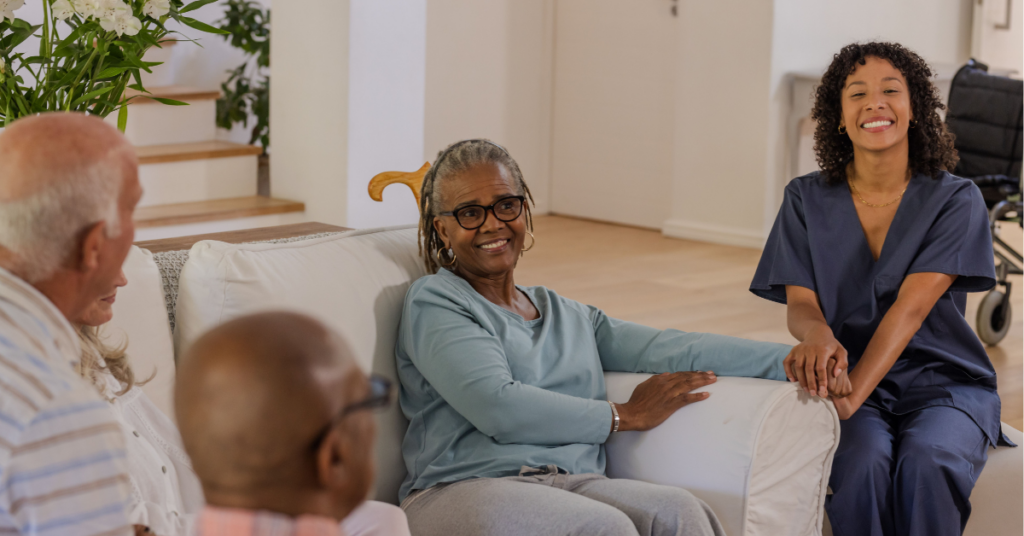
Schedule Your Free In-Home Assessment
If you’re exploring in-home care in Indian River County, you don’t have to navigate the process alone or have every answer before reaching out.
For more than 25 years, Health at Home has helped families across Indian River County and throughout Florida navigate life’s changing needs with compassion, experience, and personalized support.
As a Medicare-certified and ACHC-accredited agency, Health at Home offers both private duty home care and skilled home health care services, allowing families to receive coordinated care from one trusted team instead of multiple providers.
Schedule your free in-home clinical assessment today and discover how personalized in-home care in Florida can help you or your loved one continue living safely at home.