
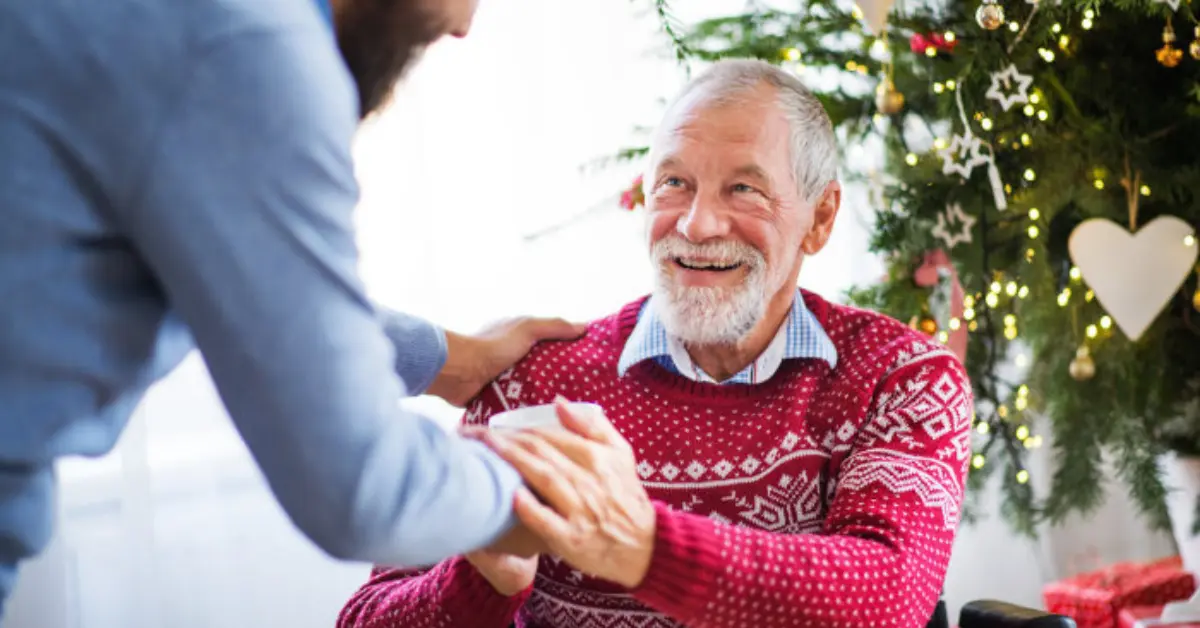
The holidays are built around tradition. We eat at the same time, make the same foods, travel to the same places, invite the same people, and look forward to doing things the way we’ve always done them.
Aging can complicate that.
The traditions themselves may still be meaningful to your loved one, even when the logistics behind them have become harder. A long drive takes more out of them. A crowded dinner is difficult to follow. An afternoon gathering runs through the time they normally rest. Even joyful moments can create confusion.
That’s why holiday safety for seniors goes well beyond removing tripping hazards or making sure someone has a ride home. It means paying attention to how changes in routine, mobility, hearing, memory, energy, and care needs can affect the way an older adult experiences the season.
The goal is to understand what your loved one needs now and make thoughtful adjustments that allow them to stay part of the celebration. Here are seven places to start.
1. Use Holiday Visits to Notice What May Have Changed
For families who live apart, the holidays may be one of the few times each year you spend several full days with an aging parent or loved one. A phone call can hide quite a bit.
Your mom can tell you she ate dinner without mentioning that dinner was crackers. Your dad can say the house is fine without mentioning that he stopped using the upstairs shower because the stairs feel difficult. A spouse can say, “We’re managing,” while quietly taking over medications, cooking, driving, laundry, appointments, and personal care.
Being physically present gives you information you simply cannot get from a weekly call.
Pay attention without turning the visit into an inspection. Notice whether medications appear organized, food is available and fresh, clothing and personal hygiene look typical, bills and mail seem under control, and your loved one is moving through the home comfortably.
Also watch for changes that are easy to dismiss:
- Is Mom struggling to get out of a chair she used to rise from easily?
- Has Dad stopped using part of the house because stairs or steps feel difficult?
- Are there unexplained dents on the car?
- Is one spouse repeatedly correcting or speaking for the other?
- Does your parent seem to lose track of conversations more easily than they did last year?
One observation usually doesn’t tell you much. A pattern can. You don’t want to diagnose your loved one over Christmas dinner, but you can get a more accurate picture of how everyday life is actually going.
2. Reduce Noise and Overstimulation During Holiday Gatherings
Holiday gatherings can be surprisingly demanding. Music is playing. Children are talking. Dishes are clattering. Someone has a football game on in the next room. Three conversations are happening around the same table.
For an older adult with hearing loss, processing all of that can require tremendous effort.
Hearing loss is a reality for more than 65% of adults age 71 and older, and hearing loss was associated with poorer relationship quality, fewer close friendships, less social participation, and greater loneliness. Research on older adults in group settings has also found that background noise and room acoustics can make speech considerably harder to understand, particularly for people already experiencing hearing loss.
Someone who becomes quiet during a gathering may not want to withdraw. They may simply be exhausted from trying to follow the conversation. A few adjustments can make participation easier:
- Turn off background television during meals.
- Seat your loved one where they can see people’s faces.
- Avoid talking to them from another room.
- Encourage smaller conversations instead of everyone talking at once.
- Make sure there’s a quieter place to step away when needed.
Holiday safety for seniors includes emotional and sensory comfort too. Sometimes making a gathering more accessible is as simple as making it easier to hear and participate.
3. Keep Routines Familiar for Someone With Memory Loss
The holidays are full of changes to a normal day. Meals happen later. Guests arrive. Furniture moves. People stay overnight. Travel may mean sleeping somewhere unfamiliar.
For someone living with Alzheimer’s or another form of dementia, those changes can become disorienting quickly. The National Institute on Aging recommends maintaining familiar eating, resting, and bedtime routines when possible and limiting crowds, unfamiliar environments, and other changes that may contribute to confusion or anxiety.
That can require adjusting the holiday around your loved one instead of expecting your loved one to adjust to the holiday.
If Dad normally eats lunch at noon and rests at 1:00, waiting until 3:30 for a large family meal may not be worth it. If Mom becomes more confused in the evening, a holiday lunch may work better than a late dinner.
Family interactions may need adjusting too. A relative who hasn’t visited in a year may naturally ask, “Do you remember who I am?” For someone who doesn’t, that greeting can immediately become a test.
Instead, try: “Grandma, it’s Michael. I’m so happy to see you.”
Rather than continually trying to bring your loved one back into everyone else’s version of the day, help them feel comfortable inside their own experience of it.
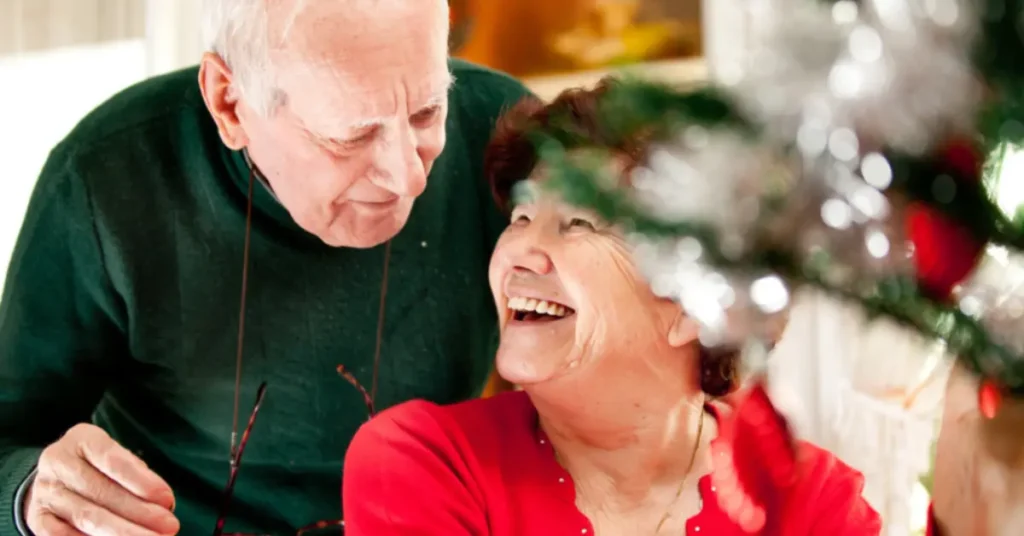
4. Think About How Holiday Meals May Need to Change
Food carries a lot of emotion during the holidays. That can make it difficult to change traditions that have existed for years. But an older loved one may experience the holiday table differently than they once did.
Someone living with dementia may become distracted by a crowded table or overwhelmed by too many choices. A person recovering from a stroke may have swallowing considerations. Diabetes, heart disease, kidney disease, medication changes, reduced appetite, dental problems, or difficulty using utensils can all affect what eating comfortably looks like.
That doesn’t mean your parent needs a separate “senior meal.”
It may simply mean dinner happens earlier. Portions are smaller. Familiar foods remain on the menu. The television gets turned off while everyone eats. Or your loved one eats at their normal time instead of waiting several extra hours for the formal holiday meal.
Preserving the tradition and adapting the logistics can coexist.
5. Increase Safety for Seniors by Making Holiday Decorations Safer to Navigate
One of the benefits of a familiar home is predictability. You know where the chair is. You know how many steps there are between the bedroom and bathroom. You know where furniture begins and ends without consciously thinking about it.
Then the holidays arrive. There are electrical cords along the wall, presents beside the sofa, additional chairs around the table, decorative rugs near the doorway, and boxes occupying what used to be open floor.
For someone with poor balance, decreased vision, Parkinson’s disease, weakness after hospitalization, or a mobility device, small decorating changes can completely change the way they move through the house.
Falls are already a significant concern for older adults. CDC guidance identifies clutter, throw rugs, poor lighting, vision changes, balance problems, and certain medications among known fall risk factors. Before guests arrive, walk through the routes your loved one uses most often and ask:
- Can a walker fit between the tree and sofa?
- Did a decorative rug appear on a previously bare floor?
- Can your loved one still reach the light they use at night?
- Has furniture been moved from where they expect it to be?
- Are gifts, bags, cords, or decorations narrowing walkways?
- Is the route to the bathroom still clear?
When it comes to holiday safety for seniors, some of the most important adjustments are surprisingly small.
6. Don’t Assume Visiting Family Can Replace Established Care
When everyone comes home for the holidays, it can seem logical to cancel the usual caregiver. There are plenty of people around, after all.
But several loving relatives don’t necessarily replace one person who already understands how Dad transfers safely, when Mom takes her medications, which approach works when she resists getting dressed, or what her typical level of confusion looks like.
There’s also a difference between being willing to help and being comfortable providing intimate personal care.
A father who accepts bathing assistance from his regular caregiver may feel embarrassed when his adult daughter suddenly needs to help him shower. A person living with dementia may become resistant when someone unfamiliar tries to change a routine that has become comfortable.
Keeping established care in place can allow family members to remain family members. Your daughter can sit beside you instead of managing your shower. Your husband can enjoy Christmas breakfast with you instead of coordinating every part of your morning routine. Your son who flew in from another state can spend the afternoon talking with you instead of trying to learn a care routine in two days.
Professional caregiving supports family relationships, not replace them, all while prioritizing safety for seniors.
7. Adapt Traditions Without Taking Away Your Loved One’s Role
Families often become more protective as someone ages. Sometimes that means we start doing everything for them.
Mom used to make the pie, but standing for long periods is difficult now, so everyone tells her to sit down. Dad always handled the decorations, but the ladder isn’t safe anymore, so someone else takes over.
Those decisions may be completely reasonable. But safety doesn’t have to mean removing your loved one from the traditions that have helped define their role in the family. Participation can change.
Mom might sit at the table and prepare part of the recipe while someone else handles the oven. Dad might decide where decorations go instead of climbing a ladder. Someone with memory loss may fold napkins, choose the music, look through photographs, or simply stay nearby while others prepare dinner.
Ask yourself: What has always made this feel like their holiday? Then preserve as much of that as you safely can.
Holiday Safety for Seniors May Mean Letting the Holiday Look Different
There’s an emotional part of aging that doesn’t fit neatly into a safety checklist. Sometimes traditions have to change. It’s okay to acknowledge what may feel like loss.
But honoring the meaning of a tradition doesn’t require preserving every detail. There can still be familiar food, music, stories, people, and laughter. Holiday safety for seniors isn’t about eliminating everything that carries risk or requires adaptation. It’s about creating a holiday your loved one can actually participate in comfortably.
Need Extra Support at Home During or After the Holidays?
If spending time together has made you wonder whether an aging parent or spouse could use more support, you don’t need to know exactly what that care should look like before reaching out.
For more than 25 years, Health at Home has supported families throughout Palm Beach, Broward, Martin, St. Lucie, and Indian River counties. Our team can meet with you and your loved one through a free in-home assessment, see how everyday life is working in the home, and talk candidly about where additional help may make sense.
Whether the need is companionship, personal care, help maintaining familiar routines, or simply another trusted person in the home, we can help you plan support around the life your loved one is already living.